


KFK Was Designed as a Guarantee Company to Provide End-to-End Digital Services
We spoke with Ömer Karakuş, General Manager of Katılım Finans Kefalet, about how KFK came about and the contributions its establishment will make to the participation banking ecosystem. First of all, what is the main purpose of guarantee companies and which areas of activity...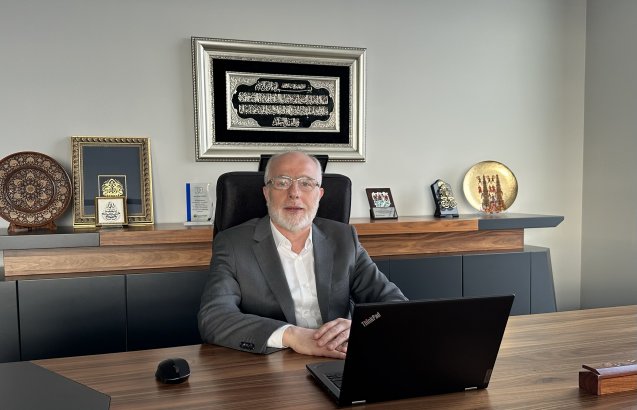
We spoke with Ömer Karakuş, General Manager of Katılım Finans Kefalet, about how KFK came about and the contributions its establishment will make to the participation banking ecosystem.
First of all, what is the main purpose of guarantee companies and which areas of activity do they focus on?
Welcome, and thank you for your visit.
The main purpose of guarantee companies is to contribute to our country's development by supporting companies that have difficulty accessing financing because they are unable to provide sufficient collateral. This support is extremely important, especially for small and medium-sized enterprises that need access to financing because they do not have sufficient equity. While banks meet companies' financing requests up to a certain level, as the requests grow they ask their customers for collateral in order to reduce their risks. However, a large proportion of these enterprises have difficulty meeting the required collateral conditions. In this case, guarantee companies step in, act as guarantors for these enterprises and make it easier for them to access the financial support they need.
Could you tell us about the establishment process and the support of the Ministry of Treasury and Finance?
There were companies previously established in our country for this purpose. However, the special reference to the development of the participation finance ecosystem in the strategy report prepared by the Presidency's Finance Office, together with the guidance of the Advisory Board of the Participation Banks Association of Türkiye that an exclusive guarantee company should be established to meet the needs of customers wishing to act in accordance with participation banking principles, accelerated the establishment of our company.
TKBB took the initiative to speed up the process and launched the establishment work in the first months of last year. Mr. Osman Çelik, currently Deputy Minister of Treasury and Finance, was at that time Chairman of the Board of TKBB in his capacity as General Manager of Vakıf Katılım Bankası. His contributions and those of TKBB Secretary General Mr. İsmail Vural to the establishment work were very valuable. With the ownership of the Ministry of Treasury and Finance (HMB), the process progressed rapidly, and our company was registered and started its operations on 29 March 2023.
My involvement in the process dates back to the early stages of the company's establishment. I worked for 33 years at Kuveyt Türk Katılım Bankası, the first workplace of my professional life. Throughout my career, I served in various positions in different areas such as loans, marketing and product development. As an engineer by background, I was assigned to many infrastructure development, process improvement and organizational projects. Particularly in recent years, I worked on analytical decision support systems for credit transactions and took an active role in infrastructure projects at Kuveyt Türk. My background must have been found suitable, as I was appointed to establish the company at the end of February 2023 upon TKBB's proposal and HMB's approval.
Guarantee companies assume guarantee risks based on two main sources. The first is the equity contributed to the company by its shareholders, and the other, more important one is the resources provided by the Ministry of Treasury and Finance. Due to the size of the credit volume it creates, HMB support is of great importance for guarantee companies. In fact, this is the most important factor that increases the value and importance of guarantee companies.
HMB uses different incentive mechanisms in managing the economy. It provides some of them directly and sometimes uses intermediaries. The guarantee system is one of these methods. Guarantee companies are essentially companies that manage the process ensuring that this incentive provided by the state reaches the right recipients in the appropriate manner.
Are there certain conditions for benefiting from this guarantee?
Of course. This is a great opportunity, but since the state assumes the indemnification risk, it asks companies to fulfil certain conditions. For example, the state is cautious towards companies and their partners that have tax debts, whose debt repayment capacity has decreased or that have gone bankrupt in the past. It supports companies that actually have repayment capacity but have difficulty accessing financing because they cannot meet the required collateral conditions. On the other hand, it also sets conditions such as the maturity of the financing, its intended use, the sector of activity and company size. In other words, it provides this incentive to companies in selected sectors and regions, provided that they meet certain conditions.
What are the main reasons behind the emergence of KFK and what problems was it created to solve?
Guarantee companies require banks to become shareholders in order to benefit from the guarantee facilities they provide. For this reason, participation banks had to become shareholders of KGF and İGE so that their customers could benefit from this service. Since these companies also guaranteed loans that were not compliant with participation banking principles, this situation was not found appropriate by the TKBB Advisory Board, which expressed the opinion that an exclusive guarantee company should be established. As Advisory Board decisions are binding, the matter was discussed by the TKBB Board of Directors and a decision was taken to establish a new guarantee company. In this way, an important gap within the participation finance ecosystem was filled.
Could you tell us about the process by which the Ministry of Treasury and Finance of the Republic of Türkiye became a shareholder of KFK?
Within the scope of the improvement of the financial architecture and infrastructure initiated by the Ministry, TKBB Secretary General Mr. İsmail Vural, in response to a question from our former Minister of Treasury and Finance Mr. Nurettin Nebati about TKBB's agenda and needs, mentioned KFK A.Ş., which they had decided to establish. Our Minister showed interest in the matter and stated that the Ministry would like to become a shareholder of the company. This decision of the Ministry accelerated the process even further.
After the General Manager was appointed, the establishment work began in a small office allocated to the company at the TKBB headquarters, and the company's establishment was completed in a short period of about one month. Established on 29 March 2023, the company is the first company in which all participation banks are shareholders. Our greatest wish is that this situation, which makes us proud, will pave the way for new partnerships and joint projects in the participation finance sector.
Could you give more details about the developments following KFK's establishment and the changes in its shareholding structure?
Immediately after the company's establishment, action was taken to quickly complete the necessary staffing. At the same time, priority was given to the infrastructure work required to manage guarantee processes. We had to move fast, because with the establishment of KFK, participation banks had to terminate their partnerships in other guarantee companies and meet their customers' guarantee needs through KFK.
With intensive effort, thank God, we succeeded in providing our first guarantee from our equity exactly four months after our establishment. Of course, we cannot yet say that we have a perfect infrastructure. But with the improvements we are making, we are rapidly progressing every day towards a more secure, more practical and more user-friendly infrastructure.
As you know, Hayat Katılım and TOM Bank were the first banks in Türkiye to obtain licenses in the field of digital banking. As soon as both participation banks completed their infrastructure work and started operations, partnership negotiations with KFK began. TKBB, which played an active role in the establishment of KFK and held a 6% stake in the company, left the partnership by transferring its shares equally to these two digital banks. Since the workflow processes of digital banks differ from those of conventional banks, we need to adapt our system infrastructure to meet these new needs.
With the new shareholding structure, 96% of our company's shares belong to participation banks and 4% to HMB. Unlike other guarantee companies, the main shareholders of KFK are participation banks. In a sense, participation banks are both the owners and the customers of KFK.
Could you talk about the need of digital participation banks for the guarantee system?
Digital participation banks are, in fact, the institutions that need the guarantee system most, since they have to carry out all their transactions digitally end to end. They can obtain real estate mortgages as collateral through digital channels, but the legal infrastructure is not yet ready for taking customer cheques or similar collateral. For this reason, the guarantees to be provided by KFK are critically important for digital participation banks in terms of securing the funds they extend.
Of course, for the process to proceed end to end through digital channels, certain adaptations will need to be made to the infrastructure on both the digital participation banks' side and KFK's side. For example, since digital participation banks have no branches, they have to collect data entry not through branch staff, as other participation banks do, but through an interface where customers enter the data themselves. Naturally, this requires a number of security and control elements to be strengthened in the KFK infrastructure. By cooperating on this, we will work on what can be developed both to facilitate the workflow and to make the process secure by determining the necessary control points.
What do you think about the impact of digital banking on corporate customers?
In fact, digitalization in retail banking has made significant progress both in our country and around the world. Transactions such as opening accounts, deposit relationships and establishing simple credit relationships have largely been digitalized end to end. However, on the corporate side, digitalization has not yet reached the expected level and is still maturing. While branch-based banks are working on solutions that will respond to the needs of corporate customers end to end through digital channels in order to reduce costs and provide fast, on-the-spot service, this issue has gained further speed and importance with the entry of digital banks. In line with the requirements of the future, KFK was also designed as a guarantee company that will provide end-to-end digital services.
Could you tell us about KFK's target audience and digitalization process?
Our target audience is primarily SMEs. Large companies are at an advantage compared to SMEs in accessing financing, both due to the strength of their financial structures and their capacity to provide collateral. However, during banks' credit allocations, it is more difficult to obtain consistent multi-year data from small businesses, and many of them cannot meet the required collateral conditions, which requires banks to be cautious. This makes it harder for SMEs to access financing. As Katılım Finans Kefalet, we were established to facilitate SMEs' access to financing, and we aim to be an end-to-end digital guarantee company. At present, we have not yet reached the desired level of automation in our guarantee allocation processes. However, after completing the necessary integrations and infrastructure work, we aim to integrate the decision support system we are currently working on into our KFKS infrastructure by the end of the year.
What are your thoughts on artificial intelligence-based decision support systems?
That is exactly our goal: to carry out guarantee allocation processes with criteria that are as objective as possible. Banks experienced customer dissatisfaction and customer losses because of the so-called "auto-allocation" models they used. For this reason, they now prefer to use decision support systems (DSS) that leave the final decision to the user when necessary and that learn from their mistakes and improve themselves. These AI-based models make the vast majority of decisions themselves, but leave certain decisions, referred to as the "grey area", to the user. The user reviews the machine's recommendation and makes a decision based on their own opinion. This final touch is a practice that minimizes customer dissatisfaction and losses.
Could you tell us about KFK's guarantee infrastructure?
As a company, we are building a guarantee infrastructure that is entirely our own. The design and software are unique to us. When we started, we held meetings with our stakeholders and took their ideas. We designed our software taking their views into account as well.
As I mentioned earlier, as KFK we have started providing guarantees from our equity. At present, apart from the digital banks that have recently joined us, there is no shareholder that does not use guarantees. In order to use Treasury resources, we need to meet the minimum requirements set by HMB. We have fulfilled the vast majority of these very high-standard requirements and signed our protocol with HMB. Once we complete a few minor shortcomings that will be resolved shortly, we will also be able to start providing guarantees from HMB resources.
Could you tell us about the incentive and grant programs provided by the state? Can you share the contents of KFK's packages?
When necessary, the state provides incentives to selected sectors and companies in line with its periodic strategies. For example, the current Treasury packages were prepared for exporting and investing companies. There are also additional incentives for companies operating in the earthquake region.
As KFK, we have 3 announced and ongoing guarantee packages based on our equity. One of them is for the financing of operating expenses, and the other two were designed for exporting companies and investing companies in parallel with the current policies of our economic administration.
Could you tell us about how your packages are determined?
First, we announced a pilot package for financing companies' operating expenses. After reviewing our infrastructure with the experience gained from this package, which will expire at the end of March, we announced two more packages for exporting and investing companies. We designed our last two guarantee packages to address selected sectors in parallel with HMB's economic program. God willing, we will soon announce a larger equity-based guarantee package. With this package, we will support companies' access to the financing resources they need by providing guarantees for business financing with a particular focus on the theme of "sustainability".
In the coming period, we will work on cooperation with KOSGEB and EXIMBANK. We are also evaluating opportunities to benefit from special-purpose funds from domestic and international sources.
What do you think about the economic process and the upcoming elections?
Since fighting inflation is the main focus, efforts are being made to cool down the economy. However, I believe that companies' financing needs will continue to increase in the coming days. In an inflationary environment, companies' operating costs, and consequently their financing needs, increase while their ability to provide collateral decreases. Some companies have so far been able to manage the process with their reserves, but sooner or later they will need to turn to external resources, even though their costs are quite high. On the other hand, we may see deterioration in the balance sheets of companies experiencing collection problems. This, in turn, will make access to financing even more difficult. That is why I think there will be an increase in guarantee requests in the coming period.
It is also commendable that participation banks, while competing with each other, have established such a joint company.
Indeed. KFK is the first enterprise in which all participation banks are shareholders. In addition to making us proud, this also places certain responsibilities on us.
Aware of this responsibility, we manage our operations by balancing competition among our shareholders. We announce packages taking our shareholders' needs into account, and we regard our capital as a trust placed in our care. This is very important to us. I can say that our greatest advantage is that we employ staff from almost all participation banks. Naturally, this means we carry traces of the culture of all participation banks. As a result, we are creating KFK's own unique structure inspired by the cultures of all participation banks. Our aim is to offer our stakeholders the best customer experience with a unique standard of service.
Thank you for the enlightening information. I wish your company success and prosperity for the participation finance sector.
Interview: Mustafa Özkan